
Dismantling instead of shredding
Frame, junction box and glass come off as separate streams before size reduction. That is where the recoverable value sits, and it is the part of a recycling plant most lines under-engineer.
Read more →
Frame, junction box and glass come off as separate streams before size reduction. That is where the recoverable value sits, and it is the part of a recycling plant most lines under-engineer.
Read more →A line fed with intact framed poly modules is a different machine from one fed with broken double-glass and thin-film. The feedstock matrix decides clamping, tooling, containment and cycle time.
Read more →We quote the line arrangement, not just the unit: infeed and staging, dust and fines control, output bays, power and compressed air, and the maintenance access the operators will need.
Read more →Seven steps turn a stack of end-of-life modules into sorted material streams. The first four are dry and mechanical; the last three prepare each stream for whoever buys it downstream.
Module type, frame profile, junction box position, glass build and how much of the consignment is already broken.
Modules presented consistently so the cutting head and clamps meet the same geometry every cycle.
The aluminium frame is released and taken out first — it is the highest-value single component and the thing most likely to damage the glass if left on.
Box, cable and solder-bearing parts are detached so copper and polymers stay out of the glass stream.
Front or rear glass is released from the laminate and collected as cullet rather than broken into the mixed fraction.
Delaminated sheets are reduced for handling, dust control and whatever the downstream separation route accepts.
Glass, metals, polymer and silicon-bearing fractions are routed to their own outlets and baled or binned.

Automatic deframing: pneumatic positioning, cutting head and press. One module per minute in the standard cycle.
Open →Releases front or rear glass from the laminate after the frame and junction box are off.
Open →Box, cable and solder-bearing components taken out before glass handling begins.
Open →The front-end stations combined into one continuous line with transfer conveying and output bays.
Open →| Feedstock | Dominant constraint | What has to change | Where it usually breaks |
|---|---|---|---|
| Framed single-glass (poly / mono) | Glass is the mass; the frame is the value | Frame removal first, then junction box, then glass | Corroded or bent frames stall the positioning clamps |
| Framed double-glass | Two panes, thinner edge geometry | Gentler clamping and a different glass route | Edge chipping and glass breakage in the press |
| Thin film (CdTe / CIGS) | The semiconductor layer is the point | Containment and dust control before through-put | Dust and material containment, not cycle time |
| Damaged and broken modules | Loose glass and cell fragments | Containment, extra handling, slower infeed | Fines in conveying and blocked transfer points |
The module mix is the first question in any line enquiry. It decides whether frame removal is a value-recovery step, a handling step, or a step that has to be skipped.

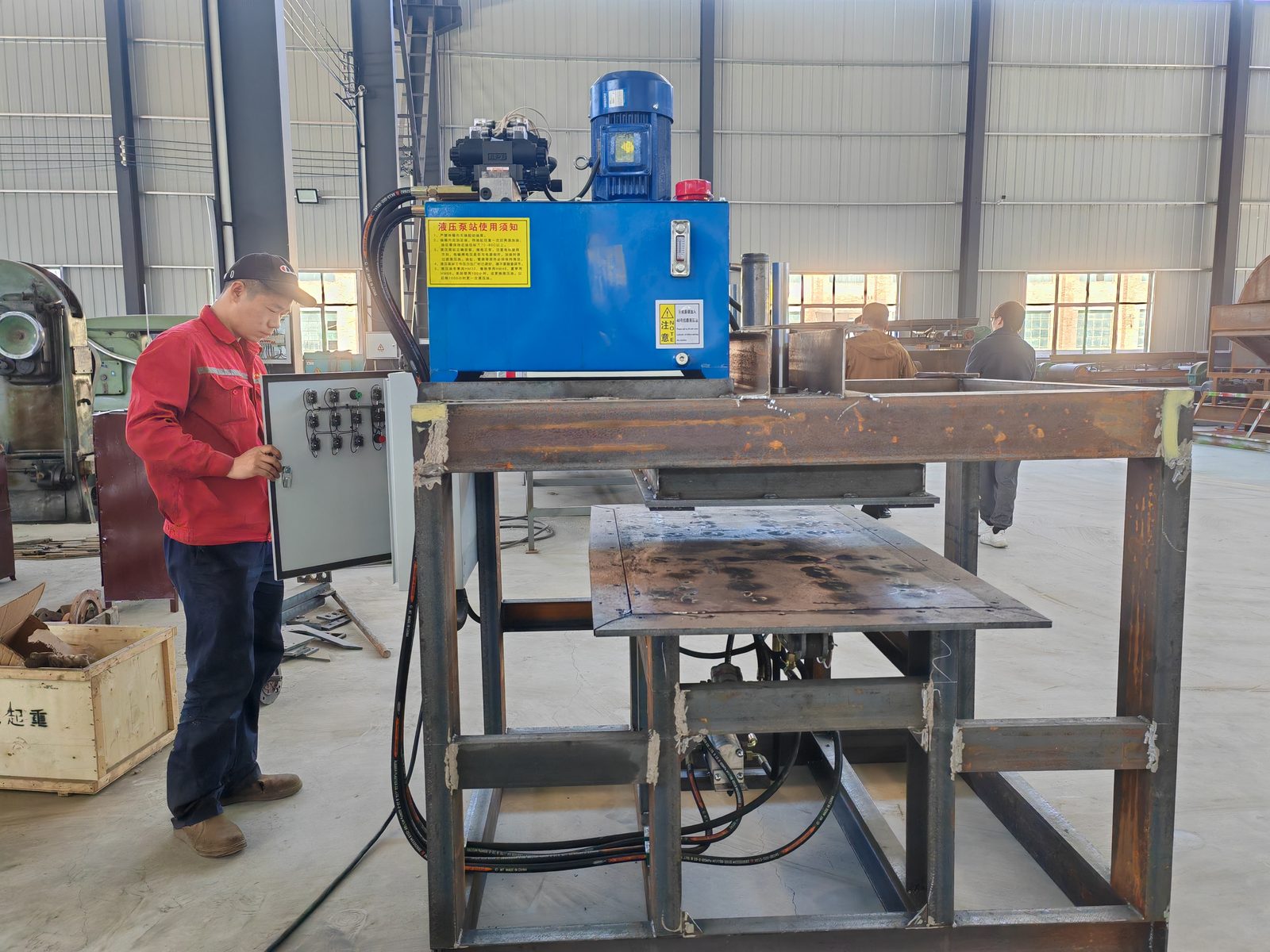
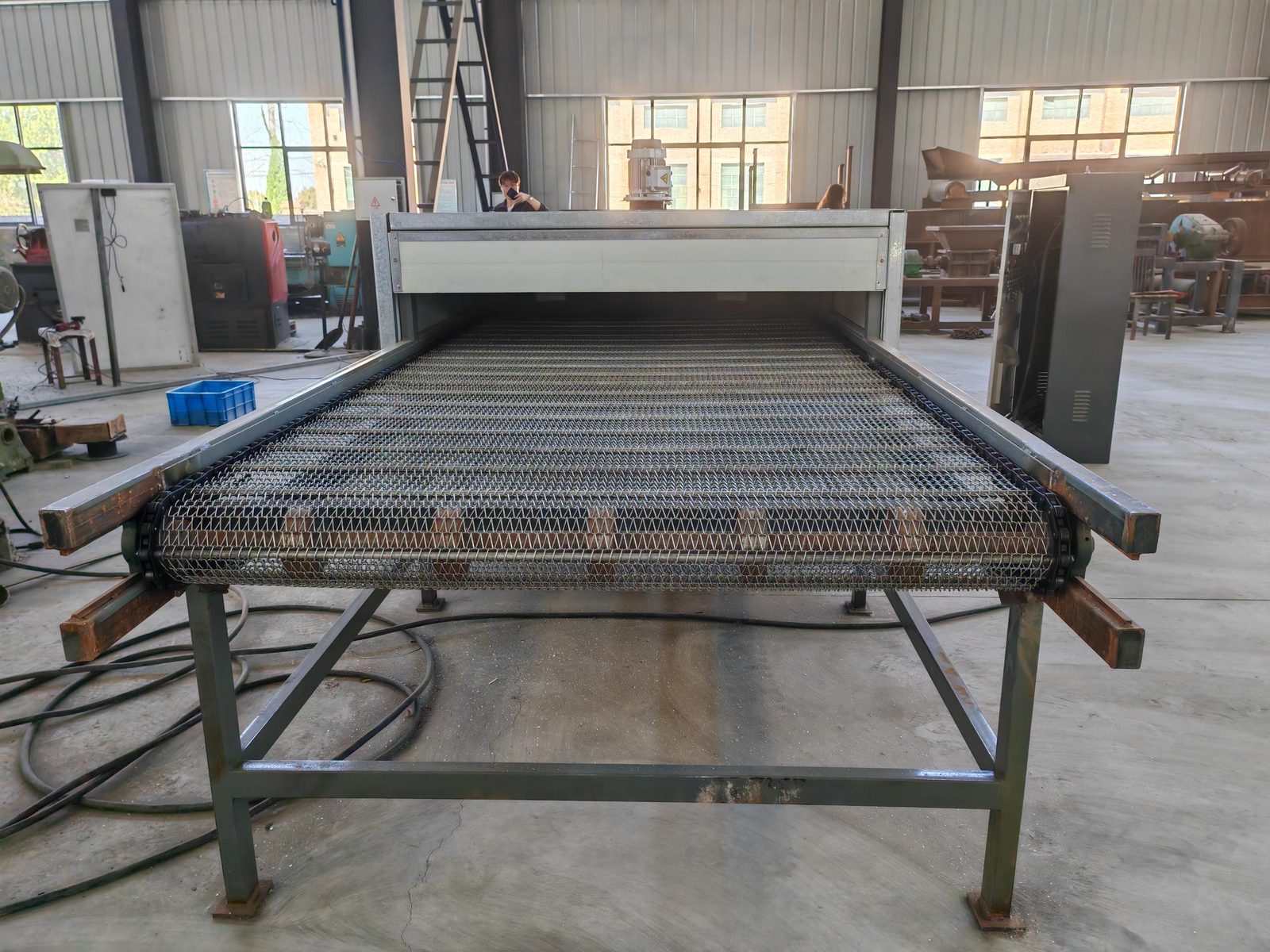
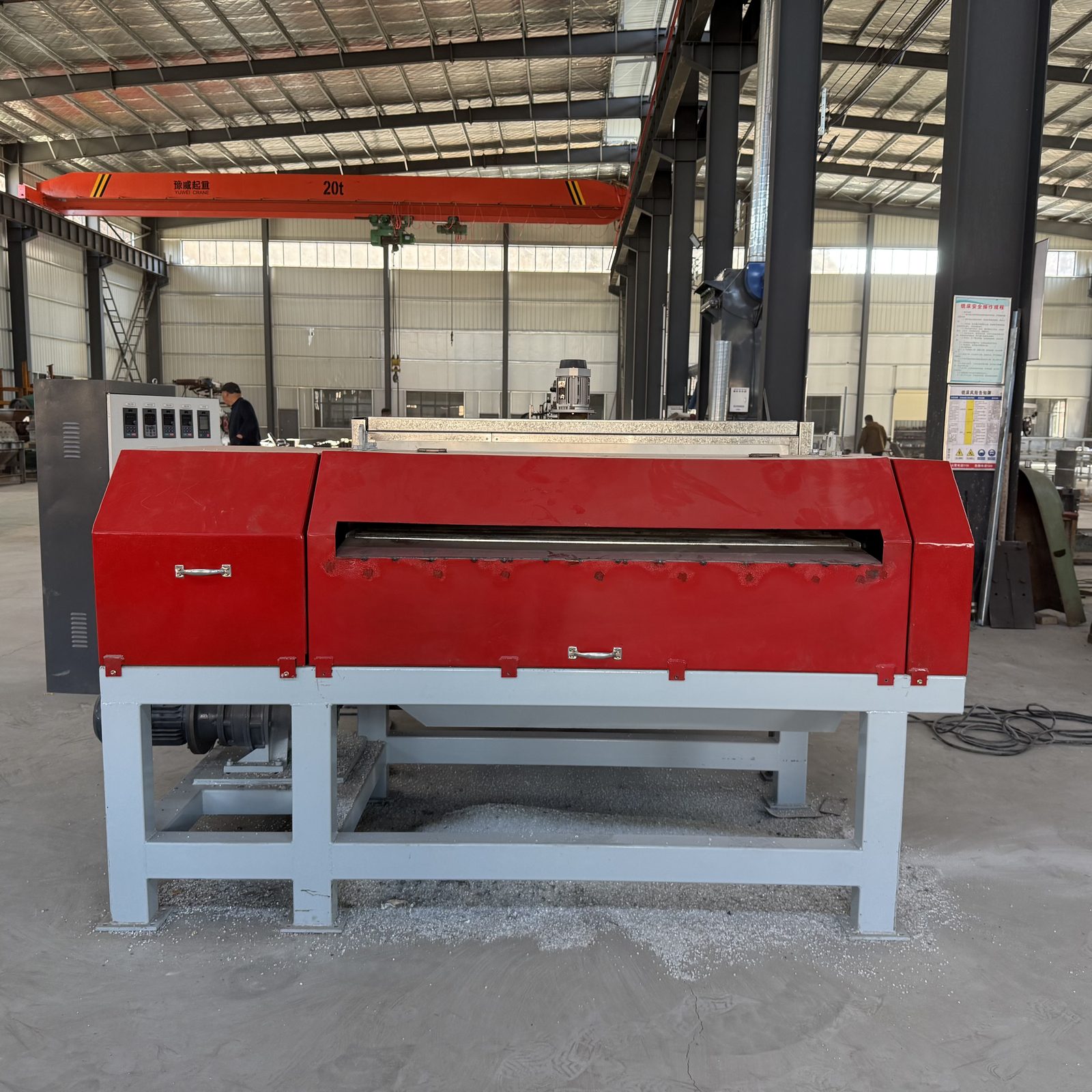
In Colombia, a licensed environmental services and WEEE operator — in the hazardous and electrical waste business since 1993, with regional licences for electronic waste dismantling and storage — bought a frame removal machine to add module deframing to its dismantling hall. The project is the reference we show to buyers who are already permitted waste operators and want to know how the machine fits beside existing equipment rather than replacing it.
Module type, condition, target through-put, available footprint and what you intend to do with each output fraction.
We come back with the machine or line arrangement, what is included and excluded, and the information still missing before drawings start.
General arrangement, utility and foundation interface, plus the commercial offer. Trial-ability on your own modules is agreed at this stage.
Fabrication in Xingyang, machine testing before crating, container loading, and commissioning and operator training at your site.
Two or three details are enough to start. You will get back an equipment configuration, what is included in the scope, and the drawings and data we still need from you.
It removes the parts of a solar panel that have to come off before the module is shredded: the aluminium frame, the junction box and its cable, and then the front or rear glass. Keeping those three steps separate is what produces sorted output instead of a mixed granulate.
The automatic frame removal machine runs a one-module-per-minute cycle — about 45 seconds of machine processing plus roughly 5 seconds of operator loading — which the equipment brief states as a through-put of 1 t/h. Achieved hourly tonnage still depends on the average mass of the modules you feed.
No. YUSHUNXIN is an equipment manufacturer. We build and export the machines; we do not operate a recycling plant, we do not buy waste modules and we do not offer collection or disposal services. If you need a permitted recycler, we can tell you what equipment they use but not act as one.
That is a configuration question, not a yes/no answer. Double-glass modules need gentler clamping and a different glass route; thin-film modules put the emphasis on containment rather than frame recovery. Both are built to order once we know the module mix, which is why the module bill of materials is the first thing we ask for.
Machines are built at our 60,000 m² works in Xingyang, Zhengzhou, Henan. The frame removal machine's transport envelope is 2.5 m high by 2.23 m wide, so it loads into a standard container. Machines are tested before crating, and we supply erection supervision and commissioning at site.
Tell us what arrives at your gate and what has to leave. The engineering team replies with the station configuration, the scope boundary and the information still missing before drawings start.
Prefer to talk first? WhatsApp +86 182 0399 3035 or email [email protected].
Three details are enough to start: what modules you receive, how fast you need to process them, and what output you have to produce.